High-Reliability DC Surge Protector for Photovoltaic Systems: Safeguarding Inverters and Modules
A DC surge protective device (DC SPD) is a critical protective device used to safeguard DC electrical and electronic equipment from transient overvoltage damage. Its primary function is to rapidly discharge or limit overvoltage energy to a safe level during a surge event, ensuring the safe and stable operation of equipment.
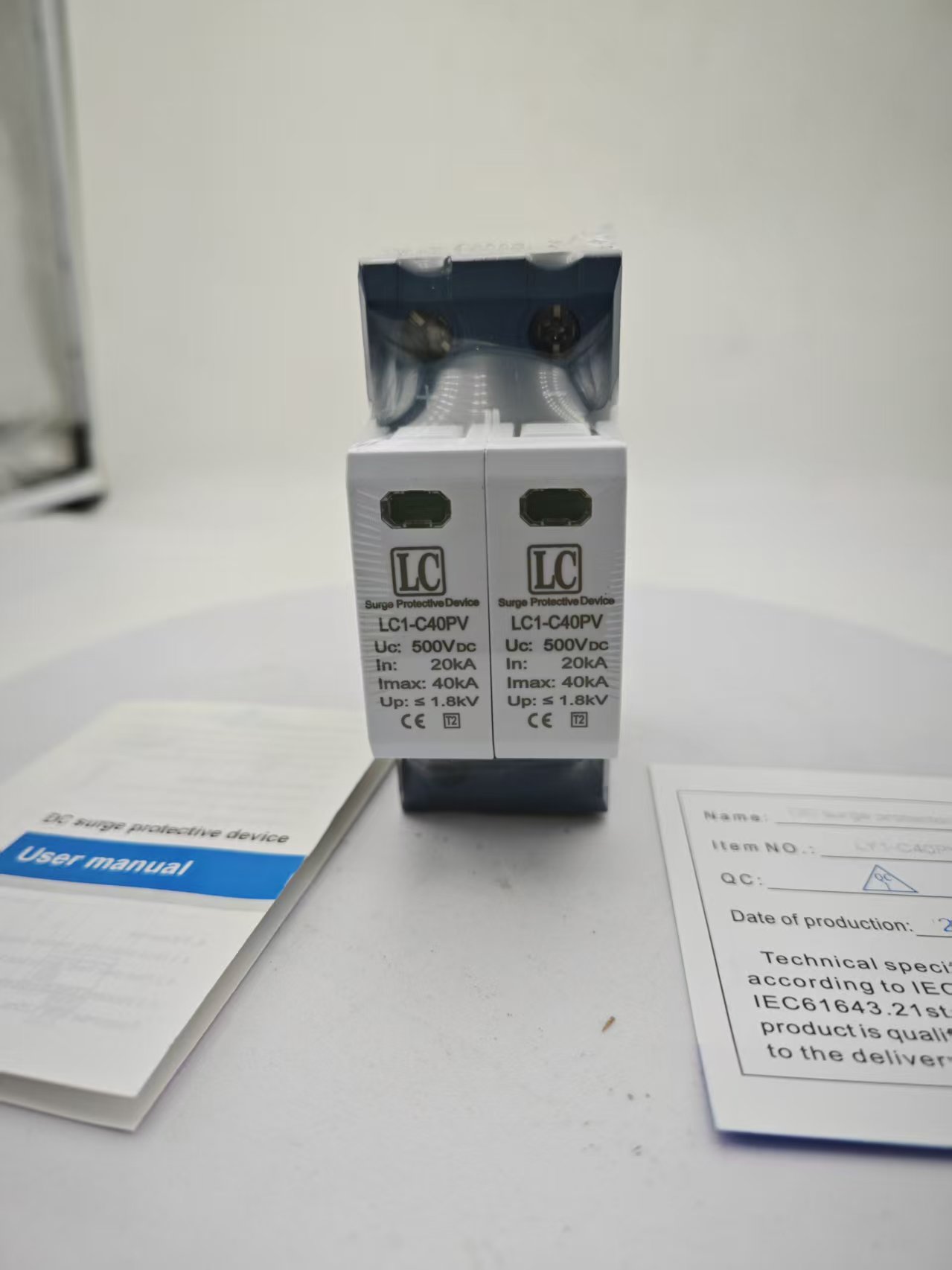
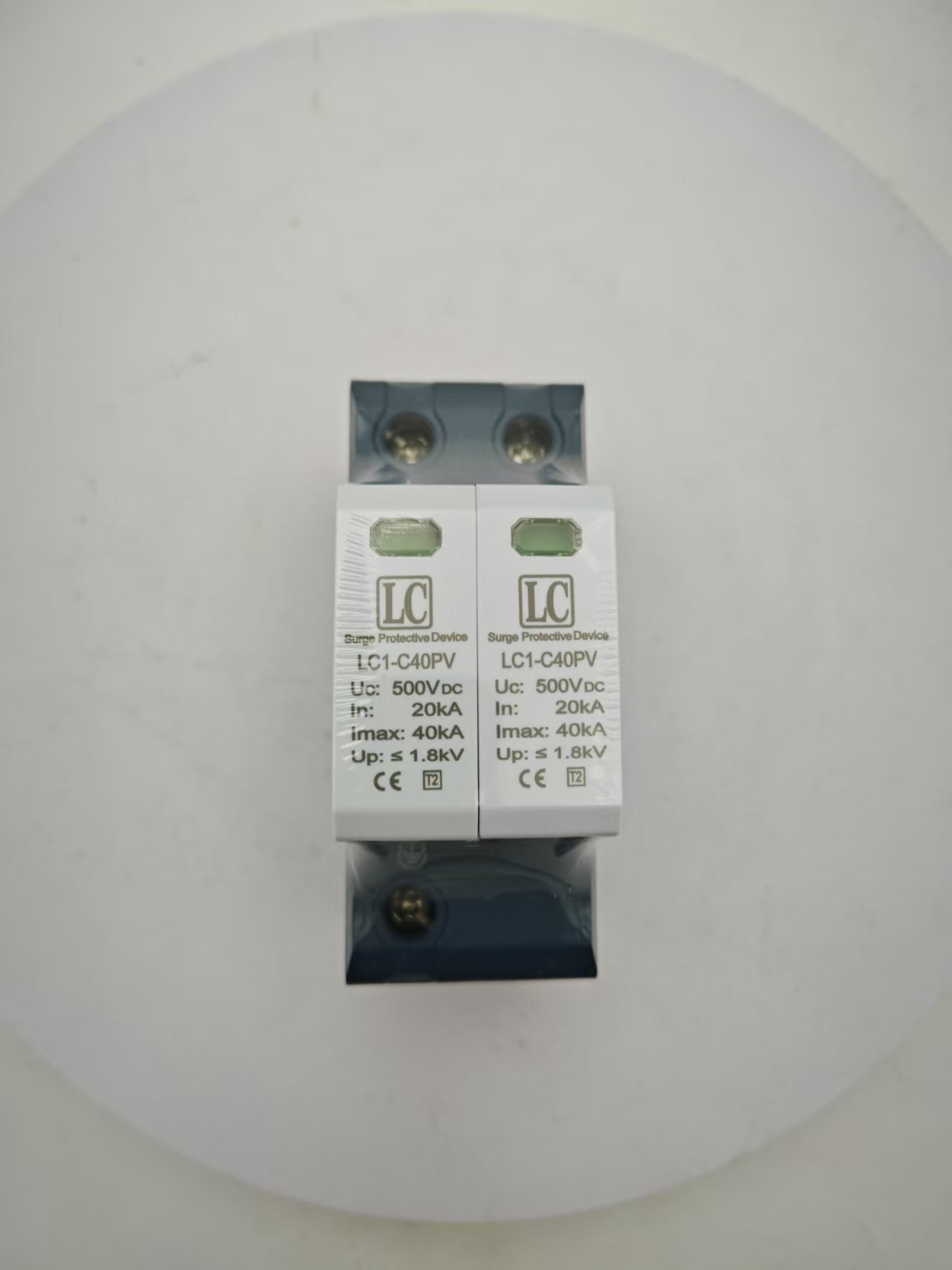
Core Features:
- DC-Specific Design: Optimized for the voltage polarity, current direction, and grounding methods of DC systems, differing in structure and principle from AC SPDs.
- Rapid Response: Nanosecond-level response speed to clamp voltage promptly.
- Multi-Stage Protection: Often works in coordination with front-end AC SPDs to form a systematic protection scheme.
- High Reliability Requirements: DC systems typically supply power to critical loads (e.g., communication and control circuits), demanding higher stability and longevity from SPDs.
Key Selection Parameters
- Maximum Continuous Operating Voltage (Uc): Must exceed the normal maximum voltage of the system (considering factors such as floating charging).
- Voltage Protection Level (Up): Determines the residual voltage; should be lower than the withstand voltage of the protected equipment.
- Nominal Discharge Current (In) and Maximum Discharge Current (Imax): Reflect discharge capacity; selected based on installation location (e.g., main distribution, equipment front-end) and expected surge intensity.
- DC System Voltage Levels: Such as 48V, 110V, 220V, 400V, 1000V, etc., must be matched.
- Wiring Configuration: Compatible with the positive/negative polarity and grounding methods of the DC system (e.g., positive grounding, negative grounding, floating ground).
Selection and Installation Considerations:
- System Analysis: Clarify the voltage, polarity, grounding method, and load characteristics of the DC system.
- Graded Protection: Install primary SPDs at the entrance of DC distribution lines and fine protection-level SPDs at the equipment front-end.
- Coordination: Ensure compatibility between SPDs and between SPDs and equipment insulation to achieve energy coordination.
- Connection Requirements: Use short and thick leads to reduce parasitic inductance and ensure unimpeded discharge paths.
- Status Monitoring: Choose SPDs with remote signal contacts or visual alarms for easy maintenance.
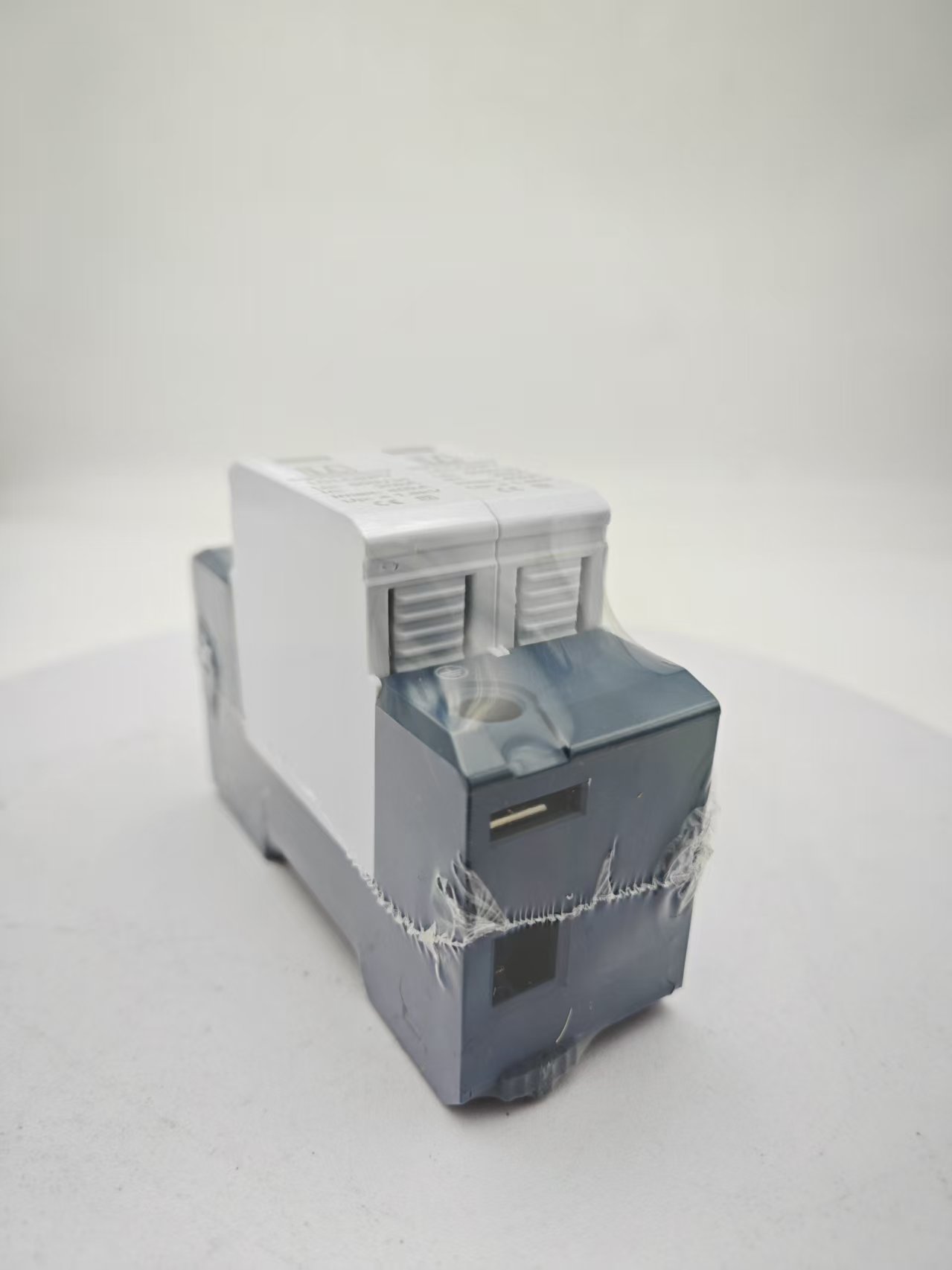
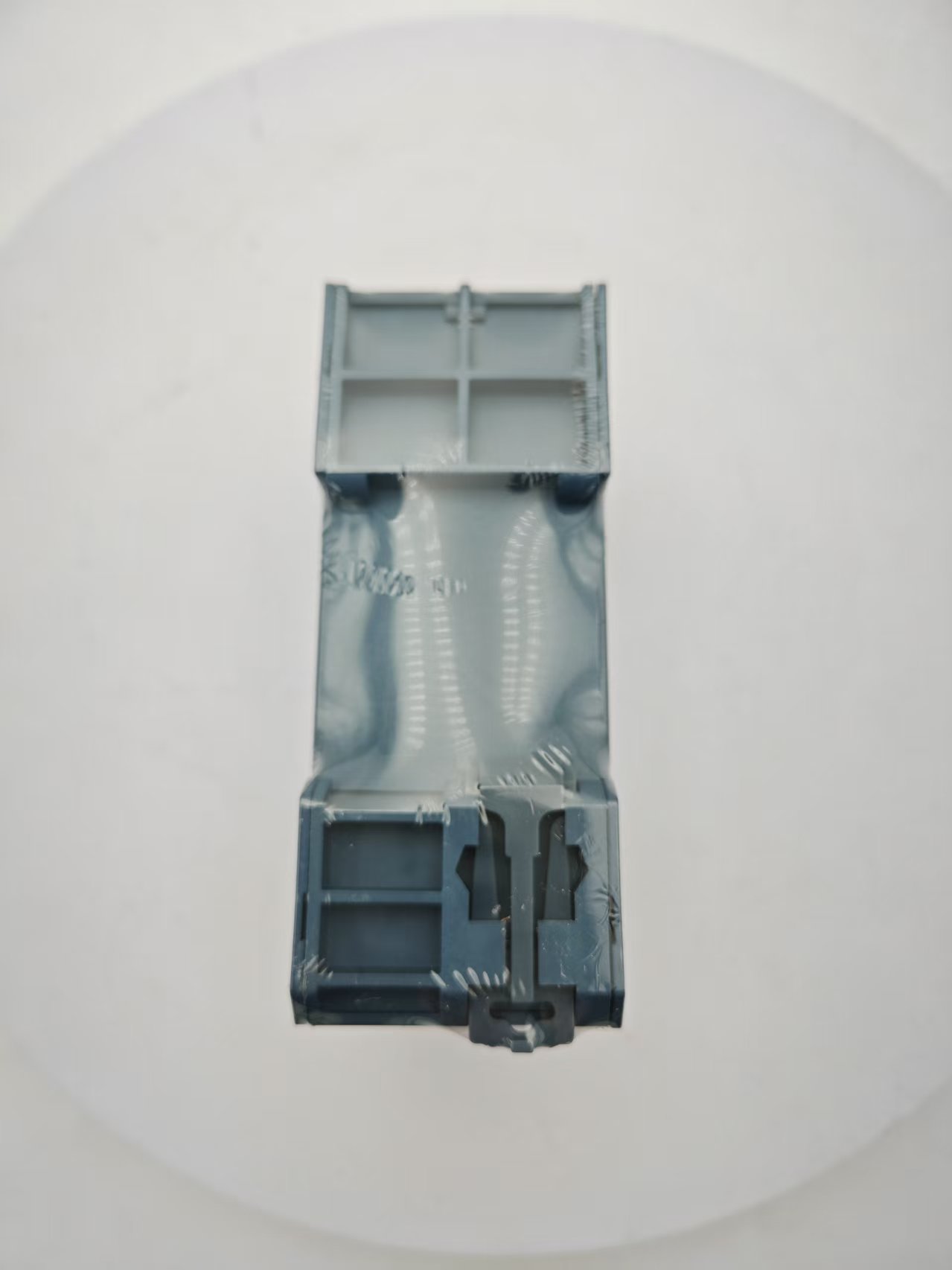
Primary Application Scenarios:
- Photovoltaic Power Systems: Protection for PV panel strings and the DC side of inverters.
- Electric Vehicle Charging Facilities: Input side of DC charging piles.
- Communication Power Systems: 48V/24V DC-powered base stations and data centers.
- Rail Transit: DC traction power supply, signaling, and control systems.
- Energy Storage Systems: Battery pack output terminals and DC busbars.
- Industrial Control DC Circuits: Power protection for PLCs, sensors, DC motors, and other equipment.
If you require risk assessment and protection configuration for your photovoltaic power station, energy storage system, or other DC power systems, please contact us. Call 008613757876329 for more technical materials and case studies.
Consult now to safeguard your critical equipment.

 How to Choose the Right Residential Load Center: The Complete Buying Guide
 Laos Electricité du Laos (EDL) Delegation Visits Beite Transformer Co., Ltd. for Technical Exchange and Strategic Cooperation,Company News
 Inside a Transformer Insulation Material Factory: How Reliable Insulation Components Are Manufactured
 Insulation Coordination for Low-Voltage Switchgear: IEC 61439 Design Requirements Explained

